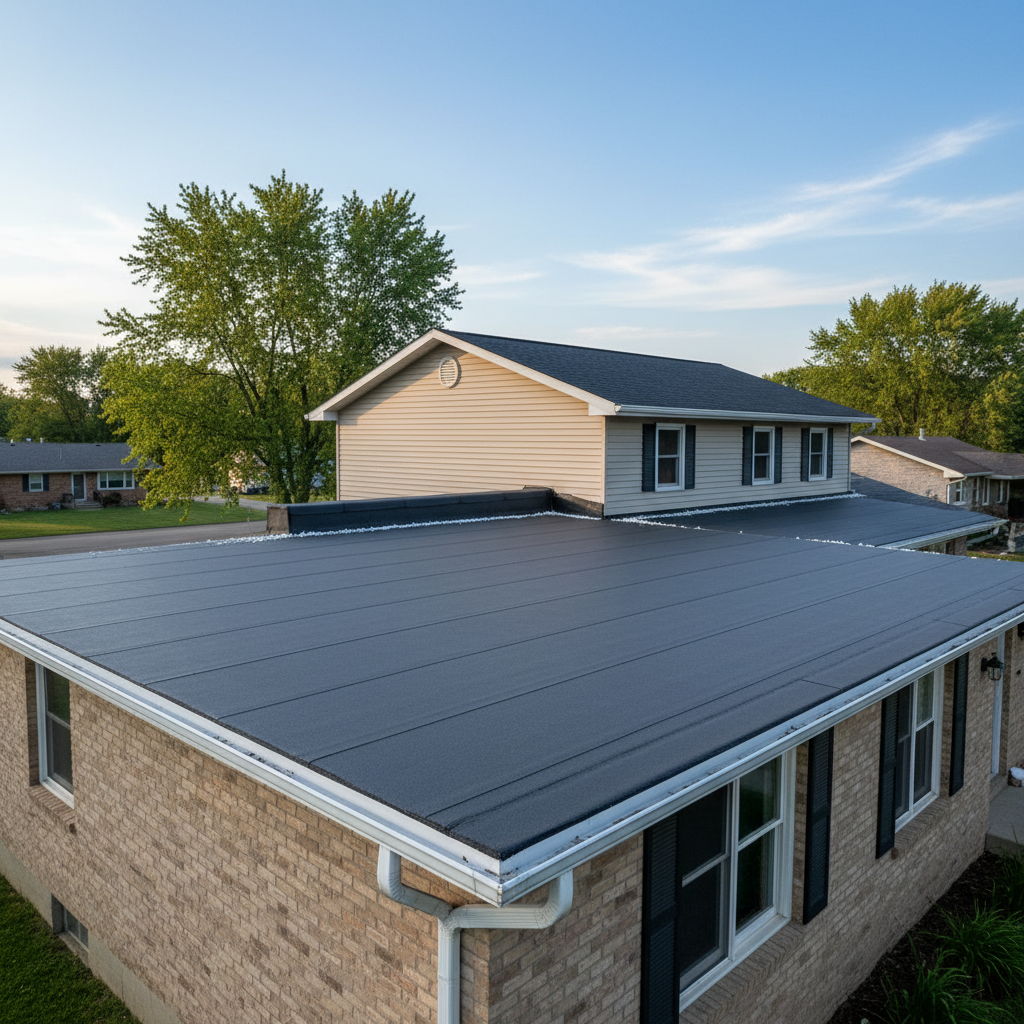
Flat roofs aren't as common on homes here in Sioux Center as they are on commercial buildings, but you definitely see them around. Maybe you've got an addition, a garage, or a modern-style house with a low-slope section. They work great for certain architectural looks and can even give you some usable deck space. But, if you're not careful, a flat roof project can quickly turn into a real headache. I've seen folks stumble into some pretty avoidable mistakes, and I want to help you steer clear of those.
Mistake #1: Thinking Any Roofer Can Handle Flat Roofs
This one's huge. Just because a crew can shingle a steep-pitched roof all day long doesn't mean they know a thing about flat roofing systems. Flat roofs – or low-slope roofs, as we often call them – are a completely different animal. You're working with different materials: TPO, EPDM, PVC, modified bitumen. And the installation techniques? Totally unique. Water doesn't just naturally run off; you've got to design the slope, flashing, and drainage carefully to stop ponding and leaks.
I've actually seen so-called 'roofers' try to put down TPO without proper heat welding experience, or even use asphalt shingles on a roof that's practically flat. It's a recipe for disaster, truly. You'll end up with leaks, mold, and a whole lot of frustration. Always ask about their specific experience with flat roofing materials and methods. Don't just take their word for it, either; ask for references from flat roof jobs they've actually completed.
Mistake #2: Forgetting About Proper Drainage and Slope
Water is the enemy of any roof, but it's especially true for a flat one. If water sits on your roof for more than 48 hours, we call that 'ponding.' Ponding water speeds up how fast materials break down, puts extra stress on the roof deck, and eventually, it's going to find its way inside. Here in Sioux Center, with our heavy spring rains and winter snowmelt, good drainage isn't just a suggestion – it's absolutely necessary.
Many homeowners don't realize that even a 'flat' roof needs a slight slope, usually at least 1/4 inch per foot, to guide water to drains or scuppers. A good contractor will plan for this right from the start, using tapered insulation or building up the deck to create that slope. If a roofer just wants to lay down a membrane on your existing, perfectly level deck, consider that a massive red flag. You'll be dealing with standing water and potential leaks before you know it.
Mistake #3: Cutting Corners on Flashing and Edge Details
The main part of a flat roof, that big open section, usually holds up pretty well if it's installed correctly. Where most flat roofs fail, though, is at the edges, around penetrations (like vents or skylights), and where the flat roof meets a wall. These are the flashing details, and they are absolutely critical. Think of them like the seams on a waterproof jacket – if those seams aren't sealed perfectly, the jacket's basically useless.
I've seen people cut corners here to save a buck, and it always, always comes back to bite the homeowner. Improperly installed drip edges, poorly sealed pipe boots, or flashing that isn't integrated correctly into the wall can lead to leaks that are incredibly tough to pinpoint. You might see water stains on your ceiling far away from where the water actually got in. A quality flat roof installation takes time and precision at these crucial spots. Don't let anyone rush through them.
Mistake #4: Not Understanding the Material Choices
There isn't just one type of flat roof, you know. You've got TPO, EPDM (often called rubber roofs), PVC, and modified bitumen, just to name the common ones. Each has its good points and bad points regarding how long it lasts, the cost, how energy-efficient it is, and how it handles our Iowa climate. For example, TPO often comes in lighter colors, which can help reflect sunlight and keep your home cooler in the summer, saving on AC costs. EPDM is generally cheaper upfront but can soak up more heat.
A good contractor, like us at Apex Roofing Co, will walk you through the options, explain the differences, and recommend the best system for your specific situation and budget. If a roofer only offers one type of flat roof material and can't explain why it's the best for your project, that's a sign they might have limited expertise or are just pushing what they already know.
Mistake #5: Forgetting About Maintenance
Just because a roof is flat doesn't mean you can forget about it. In fact, they often need more attention than a sloped shingle roof. Debris like leaves, twigs, and even dirt can pile up, especially if your drainage isn't perfect, or if you have trees nearby – which is pretty common in older Sioux Center neighborhoods, say, around the college.
That debris can clog drains, hold moisture against the membrane, and even encourage plant growth. You need to periodically clear off your flat roof, especially after storms. Also, regular inspections are super important to catch small issues – like a seam starting to delaminate or a tiny puncture – before they turn into major leaks. A little preventative care really goes a long way in making your flat roof last.
Don't let these common mistakes turn your flat roof project into a nightmare. Do your homework, ask the right questions, and choose a contractor who truly understands the ins and outs of flat roofing. It'll save you a lot of grief and money in the long run, believe me.